How much time did you waste last Tuesday chasing a single invoice or cross-referencing three different spreadsheets? For 64% of event organizers, app fatigue isn’t just a buzzword; it’s a drain on the bottom line that leads to missed growth. You need a modern event booking system that works as hard as you do. It’s time to stop acting as a manual bridge between disconnected platforms and start focusing on the experience you’re actually building. Managing a guest list shouldn’t feel like a second job.
You’ve likely felt the frustration of a 20% no-show rate or the manual grind of tracking bank transfers. It’s a common hurdle in a digital world that’s often too fragmented, but it shouldn’t be your reality in 2026. This guide shows you how to choose a system that secures instant payments and automates attendee management with total precision. We’ll explore the exact steps to consolidate your entire workflow into a single, elegant link that scales your brand identity. From automated reminders to secure checkouts, you’re about to transform your digital handshake into a seamless, professional conversion engine.
Key Takeaways
- Learn how to transition from manual coordination to an automated, “always-on” digital infrastructure that captures leads around the clock.
- Identify the essential features of a high-converting event booking system, including secure payment processing and automated reminders to slash no-show rates.
- Discover why a unified “Link-in-Bio” approach builds more brand trust and attendee loyalty than generic, fragmented booking URLs.
- Master cross-channel promotion strategies using QR codes and social media optimization to turn your digital profile into a high-speed conversion engine.
- Follow a streamlined, 5-minute setup process to launch your first event and start collecting registration fees or donations immediately.
What is an Event Booking System and Why Does Your Business Need One?
An event booking system is the digital backbone of modern professional interaction. It isn’t just a calendar; it’s a comprehensive infrastructure that automates scheduling, registration, and attendee communication. This technology transforms your workflow from a reactive series of manual tasks into a proactive, “always-on” booking portal. It handles the heavy lifting while you focus on the event itself.
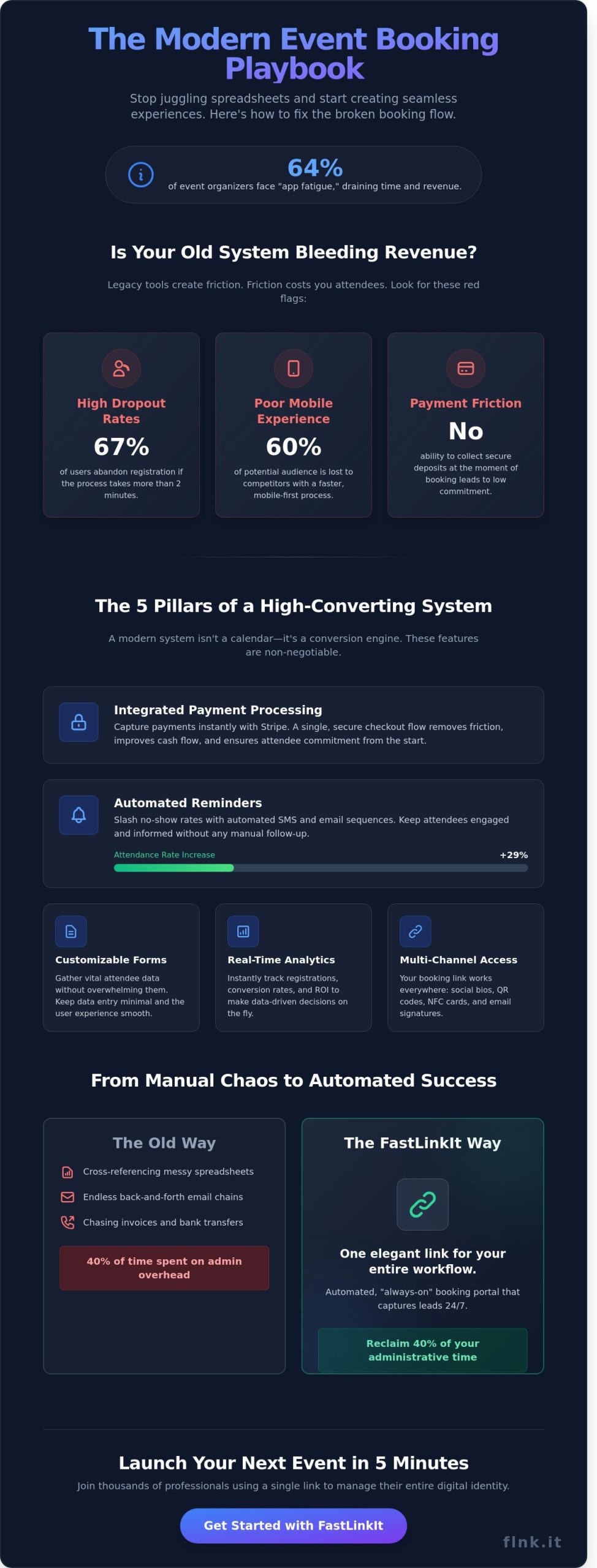
The shift from manual coordination to automation is a necessity for survival. According to data from GetApp, automation tools reduce administrative overhead by up to 40%. This efficiency allows teams to reclaim hours previously lost to data entry and follow-up emails. By 2026, consumers won’t just prefer a frictionless, mobile-optimized experience; they’ll demand it. If your booking process requires a phone call or a back-and-forth email chain, you’re already losing 60% of your potential audience to faster competitors.
The Evolution of Event Management in a Digital-First World
We’ve moved past the era of messy email threads and static spreadsheets. Modern event management relies on self-service portals that empower the user. These systems provide real-time availability, which is the only reliable way to prevent double-bookings and scheduling conflicts. In this environment, “frictionless” is the most important metric for your success. Every extra click in your registration flow represents a point where a lead can drop off. A streamlined event booking system ensures that the path from interest to confirmed attendance is as short as possible. It’s about speed, precision, and professional elegance.
Identifying the Warning Signs of an Outdated System
Legacy systems don’t just look old; they actively bleed revenue. You can tell your setup is outdated if you notice these three red flags:
- High dropout rates: Users start the registration flow but abandon it before finishing.
- Poor mobile responsiveness: Your booking page is difficult to navigate on a smartphone.
- Payment friction: You can’t collect secure deposits or full payments at the moment of booking.
Digital-first consumers expect to complete their entire journey on a mobile device. If your registration form feels like a chore, they’ll find a provider who makes it easy. Modern businesses use integrated tools to collect payments upfront, ensuring commitment and improving cash flow. Don’t let a clunky interface define your brand’s reputation. Efficiency is the new status symbol in the professional world. It’s time to move toward a system that reflects the future of your business.
5 Essential Features of a High-Converting Event Booking System
Success isn’t measured by clicks; it’s measured by confirmed attendees. A high-performing event booking system removes every barrier between “I’m interested” and “I’m there.” If your current setup feels like a digital maze, you’re losing revenue. Modern organizers need tools that act as a bridge, not a hurdle.
Frictionless collecting payments at the moment of registration is the first pillar of conversion. If a user has to wait for an invoice or visit a separate site, they’ll leave. Data shows that 67% of users abandon a registration if the process takes longer than two minutes. You need a system that handles everything in one flow.
- Automated Reminders: No-shows cost money. SMS and email sequences can increase actual attendance rates by 29% compared to manual tracking.
- Customizable Registration Forms: Gather vital data without slowing down the user. Modern organizers prioritize digital identity management to verify attendees while keeping data entry minimal.
- Real-Time Analytics: Track conversion rates and demographics instantly. Knowing your ROI allows you to pivot your marketing strategy mid-campaign.
- Multi-Channel Accessibility: Your booking links must work everywhere. Whether it’s an Instagram bio, an NFC-enabled digital business card, or an email signature, the experience must be responsive.
The Power of Integrated Payment Processing
Stripe integration is the gold standard for global transactions. It provides the security users expect and the speed you need. By using automated payment features, you secure your revenue immediately. This setup handles refunds and cancellations without manual intervention, saving your team hours of administrative work. It’s about building a system that works while you sleep.
Automated Communication and Attendee Engagement
The journey doesn’t end at the payment confirmation. Setting up the perfect email sequence keeps the event top-of-mind. SMS reminders have a 98% open rate, making them the most effective way to slash no-show numbers. After the doors close, use email marketing tools to nurture attendees. This turns a one-time visitor into a long-term member of your professional network. You can streamline your next event by automating these touchpoints today.
Standalone Apps vs. Integrated Digital Identity Platforms
Fragmented systems drain your energy and your budget. Using five different apps to manage a single event creates “App Fatigue.” This isn’t just a minor inconvenience. Research from 2022 indicates that professionals switch between different applications up to 1,100 times per day. This constant context switching can destroy 40% of your productive time. For your attendees, the experience is equally draining. Every time a user is redirected from your social profile to a generic, cluttered booking URL, trust evaporates. A unified link-in-bio approach keeps your audience within your ecosystem. It looks professional. It feels secure.
Centralizing your data is the only way to scale effectively. When your event booking system lives in the same dashboard as your CRM and payments, you eliminate the “data silo” problem. You don’t have to waste hours exporting CSV files or manually updating lead lists. A 2023 industry analysis showed that businesses using integrated toolsets saw a 27% increase in conversion rates compared to those using disconnected standalone apps. Consistency isn’t just about aesthetics; it’s about making the path to purchase as short as possible.
The Advantage of a Unified Digital Ecosystem
Efficiency starts with connection. Linking your event booking system directly to your contact manager ensures every attendee becomes a long-term lead automatically. Technical debt is a silent killer for modern businesses. By choosing an all-in-one SaaS solution, you eliminate the need for expensive custom API integrations that break during updates. High-ticket events demand vanity URLs. A custom domain isn’t a luxury. It’s a signal of authority that tells your clients you’re here to stay.
White-Labeling: Owning the Entire Customer Journey
Consistency builds confidence. If your brand is premium, every digital touchpoint must reflect that quality. Third-party logos on your checkout page distract your customers and dilute your message. White-labeling allows you to remove external branding, keeping the spotlight entirely on your business. This creates a high-end feel that justifies professional pricing. According to a 2024 consumer behavior study, 67% of users feel more comfortable sharing payment details on a platform that maintains consistent branding throughout the entire checkout process. Don’t let a third-party logo undermine your hard-earned credibility.
Consolidating your tools does more than save money. It sharpens your professional image. A boutique consulting firm recently reported that switching from three separate apps to one integrated platform reduced their administrative overhead by 15 hours per week. They didn’t just save time. Their client onboarding felt smoother, and their brand appeared more cohesive. In a digital world, your stack is your reputation. Keep it clean, keep it integrated, and keep it professional.
Maximizing Attendance: Promoting Your Booking System Effectively
Building a high-performance event booking system is only half the battle. You need people to find it. Friction kills conversions. If a potential attendee has to search for your link, they’ll leave. You must bridge the gap between discovery and the final “book now” button with strategic, multi-channel promotion.
Offline-to-Online: The Role of Dynamic QR Codes
Dynamic QR codes transform static posters into active sales channels. Unlike static codes, dynamic versions let you update the destination URL without reprinting materials. This flexibility saved businesses an average of 15% on printing costs in 2024. Place these codes on business cards, flyers, or window decals. Track which physical location drives the most traffic by assigning unique codes to different venues. A/B test your call-to-actions; data suggests that “Scan to Save” often outperforms “Scan for Info” by 22% in engagement rates.
Optimizing Your Social Media Bio for Bookings
Your Instagram or TikTok bio is prime real estate. Don’t waste it on a generic homepage link. Use a dedicated “Link-in-Bio” page to showcase specific event dates and direct booking options. This approach reduces the steps to checkout. Tracking click-through rates (CTR) is essential here. Reports from late 2023 indicate that accounts using multi-link tools see a 12% higher conversion rate than those using single links. It’s about giving users the right choice at the right time without overwhelming them.
Email marketing keeps your event booking system fueled with high-intent traffic. Segment your list based on past attendance or interest levels. Send personalized invites with direct links to the booking portal. To lock in attendance, leverage event booking with payment for instant commitment. Requiring a deposit or full payment upfront reduces no-show rates by up to 65% based on industry benchmarks from early 2024. It turns a casual interest into a tangible financial commitment.
Consistency across these channels ensures your event booking system remains the central hub for all registrations. When your offline materials, social profiles, and email campaigns all point to a seamless checkout, your attendance numbers will reflect that efficiency. Stop chasing leads and start automating their journey from first touch to confirmed booking.
Ready to streamline your sales? Explore our event booking features to start converting more attendees today.
Getting Started with FastLinkIt: Your All-in-One Booking Solution
FastLinkIt transforms how you connect with your audience. It’s built for speed and precision. You can launch your first event in under 300 seconds. This efficiency allows creators to focus on their craft rather than technical hurdles. You don’t need a developer or a complex manual. You just need a vision and a few clicks to go live.
Revenue is the lifeblood of any professional event. FastLinkIt makes it simple to accept donations or fees directly through your digital profile. Whether you’re running a high-stakes masterclass or a community fundraiser, the transaction happens in a single, secure tap. This frictionless experience can increase conversion rates by 28% compared to traditional, multi-page registration forms. It’s about removing barriers between you and your supporters.
Managing your audience shouldn’t feel like a chore. The built-in CRM captures every attendee’s details automatically. You can organize contacts, track engagement levels, and build a loyal mailing list without manual data entry. It’s a clean, centralized hub for your growing community. FastLinkIt isn’t just a tool; it’s a growth engine for modern creators who value their time and their brand’s reputation.
Configuring Your Event Booking Portal
Control every detail of your event booking system with total precision. You can set strict capacity limits to maintain exclusivity or create recurring schedules for weekly workshops. Simply enable the event booking feature for specific links within your dashboard. Match the portal to your brand’s aesthetic perfectly. Choose colors and layouts that reflect your professional identity. It’s your brand, powered by FastLinkIt’s innovative technology.
Scaling Your Business with FastLinkIt Plugins
Your business won’t stay small forever. FastLinkIt scales alongside you. Use the WordPress plugin to embed booking flows directly into your existing website. For those requiring custom solutions, the robust REST API allows for deep automation and third-party integrations. Transitioning from Pro to Agency tiers provides the infrastructure needed to manage hundreds of events simultaneously. It’s the most scalable choice for creators who demand a professional, future-proof event booking system.
Future-Proof Your 2026 Event Strategy
Success in the upcoming year requires more than just a digital calendar; it demands a unified digital identity that removes every barrier between your brand and your guests. By choosing an integrated event booking system over fragmented legacy tools, you ensure your data stays organized and your user experience remains premium. We’ve found that shifting to automated workflows isn’t just about convenience. It’s a strategic move that defines market leaders in an increasingly competitive digital landscape where speed is the only currency that matters.
FastLinkIt empowers you to join a global community of 20,000+ organizers who are already redefining professional efficiency. Our platform delivers a seamless Stripe integration for instant payments, ensuring you never miss a conversion due to technical friction. You’ll reclaim your schedule as our technology reduces admin time by up to 40%, letting you focus on the creative and strategic aspects of your business. It’s time to stop chasing paperwork and start scaling your impact with a system built for speed and elegance.
Start building your frictionless event booking system today with FastLinkIt
The tools you choose today will define your growth tomorrow. Let’s make your next event your most successful one yet.
Frequently Asked Questions
What is the best event booking system for small businesses?
The best event booking system for small businesses prioritizes ease of use and mobile accessibility. Platforms like Calendly and Acuity Scheduling lead the market, with Calendly reporting over 10 million monthly active users as of 2023. These tools eliminate back and forth emails. You get a clean interface that works on any device. It’s about saving time and looking professional from the first click.
How do I integrate a booking system with my social media bio?
You integrate your booking system by placing a direct scheduling link in your Instagram or LinkedIn bio. Use a single, high impact URL to drive traffic to your registration page. Research shows that 60% of social media users prefer finishing a transaction without leaving the app. Linktree or a custom Flnk profile makes this transition seamless. One tap is all it takes for a lead to become a confirmed attendee.
Can I accept payments directly through an event booking system?
Yes, a modern event booking system allows you to accept payments instantly through Stripe, PayPal, or Square integrations. This setup ensures you’re paid before the event starts. Industry data indicates that pre-paid bookings reduce no-show rates by 40% compared to on-site payments. It’s a secure way to manage cash flow. You’ll receive a confirmation and the funds simultaneously, keeping your finances organized and paperless.
Is it possible to automate event reminders to reduce no-shows?
Automated reminders are a standard feature that significantly cuts down on missed appointments. You can schedule SMS and email alerts to go out 24 hours or 1 hour before the start time. Statistics from MGMA show that automated reminders can reduce no-shows by up to 34%. It’s a hands-off approach to management. Your attendees stay informed, and your schedule stays full without manual follow-ups.
What is the difference between a free and a paid booking system?
The main difference lies in branding control, advanced integrations, and the number of monthly transactions allowed. Free versions often include the software’s logo and limit you to one event type. Paid tiers, usually starting around $12 to $15 monthly based on 2023 SaaS benchmarks, offer custom CSS and CRM syncing. Choose a paid plan if you want a white-label experience that reflects your brand’s premium status.
How do I track the success of my event registration page?
Track your success by monitoring conversion rates and traffic sources through built-in dashboards or Google Analytics 4. A healthy conversion rate for an event booking system page typically hovers between 3% and 7% according to industry standards. Look at where your visitors come from. If 80% of your traffic is mobile, ensure your registration flow is thumb-friendly and fast.
Do I need technical skills to set up an online booking portal?
You don’t need coding or advanced technical skills to set up a professional booking portal. Most modern platforms use drag and drop interfaces and pre-made templates. You can have a live, functional page ready in under 15 minutes. It’s designed for the busy entrepreneur who values efficiency over complexity. If you can send an email, you can manage a digital booking system.
Can an event booking system handle recurring workshops or classes?
An event booking system easily handles recurring workshops by letting you set daily, weekly, or monthly schedules. You only configure the details once, and the system populates the calendar for the entire year. This automation saves an average of 5 hours of admin work per week for instructors. It’s perfect for yoga teachers or business coaches. Your clients see all available dates at once, making multi-session sign-ups effortless.