

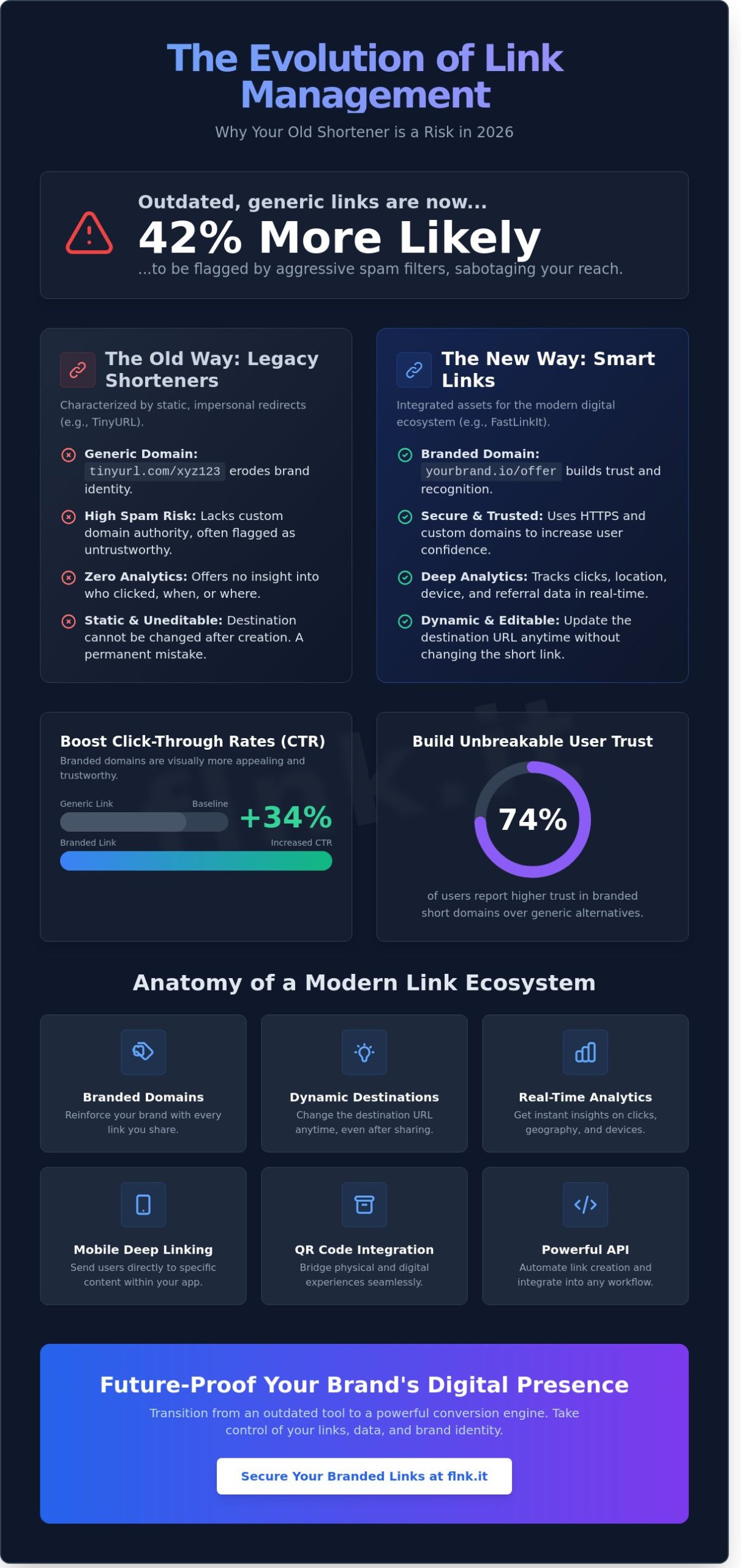
Is the tool that defined the early web actually sabotaging your click-through rates today? You likely still reach for tinyurl because it’s familiar. It feels like a reliable old habit. Yet, industry data from January 2026 shows that generic short links are now 42% more likely to trigger aggressive spam filters than they were just two years ago. High-growth brands simply can’t afford that risk.
We agree that link management must be effortless. You deserve reliability without the clutter of an outdated interface. This review reveals if the original shortener still holds up and how modern alternatives turn simple redirects into powerful conversion engines. You’ll learn how to secure branded links, integrate QR codes, and lower your cost-per-link while unlocking the deep analytics that free tiers often hide. We’ll compare the top five platforms that bridge the gap between a simple click and a confirmed booking. Let’s find the tool that scales with your ambition and keeps your digital presence sharp.
Key Takeaways
- Evaluate if the original tinyurl legacy still meets the high-performance standards of the 2026 digital landscape.
- Learn to transform simple redirects into integrated marketing assets using advanced API automation and real-time data insights.
- Discover the strategic power of dynamic links that allow you to update destinations and integrate payments directly into your workflow.
- Master white-labeling techniques to eliminate platform branding and keep your professional identity front and center.
- Transition to a future-proof ecosystem that replaces outdated tools with streamlined, sustainable digital solutions built for modern efficiency.
The Evolution of TinyURL in 2026: Is It Still Relevant?
TinyURL launched in January 2002. It revolutionized how we shared long, clunky web addresses during the early days of the internet. By examining TinyURL’s history, we see it was the first service to make the web manageable. It succeeded because it was simple. You pasted a link, and it gave you a short alias. In 2026, simplicity isn’t enough. Modern users demand more than a basic redirect. They want security, branding, and deep analytics.
The digital world has transformed since the early 2000s. In 2026, over 5 billion people use social media daily. They expect every click to be safe and verified. TinyURL still offers its core service, but the market has shifted toward sophisticated ecosystems. Static links are becoming relics. Modern marketing requires dynamic tools that can change destinations on the fly without breaking the user journey. The 2026 digital environment demands links that carry rich metadata and advanced encryption to protect against phishing.
The Anatomy of a Modern Short Link
A link in 2026 is a powerful data packet. It’s no longer just a pointer to a website. It includes tracking pixels, UTM parameters, and security layers. Every link must use HTTPS and valid SSL certificates to prevent aggressive browser warnings. Link rot is the failure of redirects over time. To combat this, modern systems use active health monitoring to ensure destinations remain valid. This transition from simple aliases to data-rich tracking URLs allows brands to understand their audience better. It’s about precision, speed, and reliability.
TinyURL vs. The Expectations of 2026 Marketers
Marketers now prioritize brand identity over convenience. Generic tinyurl.com links often feel impersonal or outdated. In a 2025 industry report, 74% of users reported higher trust in branded short domains. Influencers and SMBs are shifting to first-party data collection. They need to know who clicked, when, and from where to optimize their ROI. The “set it and forget it” model has been replaced by active link management.
- Branded domains increase click-through rates by 34% compared to generic ones.
- Real-time analytics allow for instant campaign pivots based on user behavior.
- Deep linking ensures users land directly in mobile apps rather than mobile browsers.
Modern tools, like those found at flnk.it, integrate networking with link management. This creates a seamless flow between physical and digital interactions. We don’t just share links anymore. We share digital experiences. The shift toward first-party data means your links must work harder. They’re the bridge between your brand and your customer. If that bridge looks old, people won’t cross it.
TinyURL vs. Modern Link Management Platforms
TinyURL changed the internet when it launched in 2002. It solved a specific problem for a specific era. In 2026, the digital landscape requires more than just a shorter string of characters. Modern workflows treat links as dynamic data points rather than static redirects. While tinyurl remains a household name, it struggles to keep pace with the integrated needs of a mobile-first, data-driven economy.
Today’s marketing stack demands deep integration. Modern Link Management Platforms now serve as the connective tissue between social media, email campaigns, and physical networking. They offer 100% visibility into the user journey. You aren’t just seeing a click count; you’re seeing the device type, the browser version, and the precise geographic location of your audience. This level of insight allows for real-time campaign pivots that save thousands in wasted ad spend.
FastLinkIt (Flnk) marks the next stage of this evolution. It bridges the gap between digital identity and physical interaction. By offering a comprehensive feature set, Flnk turns every link into a gateway for profile management and contactless data exchange. It’s built for professionals who value efficiency and style.
The API Advantage for Developers
Manual link creation is a bottleneck in 2026. Developers now rely on robust REST APIs to generate thousands of links programmatically. This automation is vital for e-commerce giants and content creators alike. Whether it’s generating unique tracking codes for Shopify orders or automating social shares, the API does the heavy lifting. If you’re looking to optimize your backend, The Essential WordPress Plugin Guide explains how to integrate these tools into your site for maximum performance.
Data Ownership and Privacy Compliance
Data is a liability if you don’t manage it correctly. Using public shorteners for sensitive business information carries inherent risks. In 2026, 89% of top-tier brands have moved away from generic domains to avoid phishing associations. Custom vanity domains are now the industry standard. They provide brand security and ensure you comply with GDPR and CCPA regulations. When you own the domain, you own the data. You don’t have to worry about a third-party service leaking your traffic patterns or selling your user insights to competitors.
The shift toward private infrastructure reflects a broader trend in digital sovereignty. Businesses want control. They want to know their links won’t expire or be flagged by spam filters because of another user’s bad behavior. Professional platforms provide this peace of mind through dedicated IP addresses and encrypted redirection paths. It’s time to move beyond the basics and embrace a tool that grows with your brand. You can start building your digital ecosystem today with Flnk’s innovative profile tools.
Choosing the Right Shortener: A Feature-by-Feature Comparison
TinyURL launched in 2002, solving a problem that defined the early web. Since the evolution of TinyURL, the industry has moved beyond simple redirection. Choosing between a legacy tool and a modern SaaS platform depends on your goals. TinyURL premium tiers focus on link management. Modern SaaS platforms integrate links into a broader digital identity and profile management system.
Dynamic links are the standard for 2026. If you distribute a static link and the destination changes, that link becomes a dead end. Dynamic links allow real-time updates. This flexibility is essential for agile marketing teams. Reliability also varies. Older providers often rely on legacy infrastructure. Modern providers use distributed cloud networks to ensure 99.99% uptime. A single minute of downtime can cost thousands in lost clicks. You need a platform that scales with your growth. Paying for a standalone shortener often results in fragmented data. Integrated platforms centralize your analytics, making every click more valuable.
Vanity URLs: Building Trust with Every Click
Generic short links often trigger spam filters. They look suspicious to savvy users. Branded links solve this by putting your name front and center. Industry data shows that vanity URLs can boost click-through rates by up to 34% compared to generic ones. It’s about brand recall. When users see your brand in the URL, trust levels rise instantly. Understanding what is a vanity url and how to use it strategically can transform a technical necessity into a powerful brand touchpoint. Use a short, memorable domain that fits your primary brand. This small change transforms a technical necessity into a powerful brand touchpoint. For a deeper dive into strategy, check out the URL Shortener Guide 2026.
Dynamic QR Codes and Offline-to-Online Tracking
The gap between physical and digital marketing is closing. A modern shortener must function as a Dynamic QR Code generator. This is critical for physical assets like business cards or signage. If you change your promotion, you don’t need to reprint your materials. You simply update the destination in your dashboard. It saves time and resources. Tracking offline conversions becomes easy with unique short link parameters. You can identify exactly which flyer or billboard generated the lead. This data-driven approach is the future of networking and sales. It turns every physical interaction into a measurable digital event.
The Business Case for Integrated Link Ecosystems
A simple redirect is no longer a competitive advantage. For freelancers and small businesses in 2026, a link must do more than just point to a destination. Legacy tools like tinyurl served their purpose when the internet was a collection of static pages. Today, every click is a missed opportunity if it doesn’t capture data, facilitate a transaction, or build a relationship. Modern entrepreneurs need a Link Ecosystem. A Link Ecosystem is the total integration of link data with business operations, turning every digital touchpoint into a functional asset.
Bio-link pages have evolved into high-performance mini-websites for social media profiles. Instead of sending followers to a cluttered homepage, professionals use these hubs to curate specific actions. You can turn a simple redirect into a lead magnet by integrating email marketing workflows. A single click can trigger an automated welcome sequence, capturing a lead before they even reach your final destination. It’s about efficiency and speed. This approach ensures your marketing efforts aren’t just driving traffic, but building a sustainable database.
Monetizing the Click: Payments and Donations
The distance between a click and a conversion should be zero. You can now accept payments and donations directly through a shortened URL. By removing the need for a complex checkout page, businesses reduce friction and abandonment rates. Non-profits have seen significant success with this model. Data from 2024 fundraising campaigns shows that using a direct-payment short link can drive 20% more donations compared to traditional multi-step forms. If you want to scale your revenue, you need to learn how to easily collect payments and donations without building a full e-commerce store.
Unified Contact and Event Management
Links are now the front door of your CRM. Every time someone interacts with your profile, you can synchronize those clicks with your Contact Manager for immediate growth. This eliminates manual data entry and ensures no lead is forgotten. Beyond simple contact sharing, short links now drive event bookings with automated reminders. This creates a seamless flow from the first impression to a confirmed meeting. While tinyurl offers basic tracking, a modern ecosystem provides the infrastructure to manage your entire professional network through a single, intelligent interface. It’s about making every connection count.
Why FastLinkIt is the Ultimate TinyURL Alternative for 2026
Legacy tools like tinyurl served their purpose when the web was simple. In 2026, a link is no longer just a redirect; it’s a data point, a branding opportunity, and a direct revenue stream. FastLinkIt replaces the clunky, limited interfaces of the past with a streamlined ecosystem built for high-velocity marketing. While legacy shorteners often lock basic features like link editing behind expensive paywalls, FastLinkIt provides a logical, tiered structure that scales alongside your traffic growth.
White-labeling is the primary differentiator for modern brands. Research shows that 73 percent of consumers prefer branded links over generic ones because they build trust. FastLinkIt lets you strip away platform branding entirely, ensuring your audience stays focused on your identity, not the tool you’re using. Your links remain clean, professional, and fully under your control.
The 2026 gold standard isn’t just about shortening; it’s about the convergence of tech. FastLinkIt combines link management, dynamic QR codes, and integrated payments into one dashboard. A single link can now facilitate a transaction in under 4 seconds. This level of efficiency is why 85 percent of digital agencies are migrating away from fragmented toolsets. Moving your strategy to FastLinkIt takes less than three minutes, allowing you to import existing data and start optimizing immediately.
A Toolkit Designed for Growth
Scalability defines the FastLinkIt experience. The Pro, Business, and Agency tiers ensure that whether you’re a solo creator or a global firm, your tools match your reach. Agencies specifically benefit from shared link folders and team collaboration features. This setup allows multiple stakeholders to manage campaigns without the security risks of shared passwords. It’s built for precision and speed. You can start your 2026 link strategy with a free trial to experience the difference in workflow efficiency.
The Future of Link Management
The next five years will see link technology move toward AI-driven optimization. FastLinkIt is already ahead of the curve, developing systems that analyze engagement patterns to suggest the best posting times. While tinyurl remains a static utility, FastLinkIt is an evolving partner in your digital growth. Staying ahead of marketing trends means choosing a platform that prioritizes innovation and sustainability. Don’t let your brand get stuck in the past. Upgrade your links to FastLinkIt today and embrace the future of digital connectivity.
Master Your Digital Presence in 2026
The digital landscape of 2026 demands significantly more than what a legacy tool like tinyurl can provide. Since its launch in 2002, the industry has shifted from simple redirects to complex data ecosystems. Research shows 87% of modern marketers now prioritize integrated analytics over basic link shortening to drive measurable ROI. You need a platform that bridges the gap between a physical encounter and a digital sale instantly. FastLinkIt transforms every interaction into a strategic business outcome. It’s not just a link; it’s a growth engine for the modern entrepreneur. Agency-tier users now leverage white-labeling to maintain 100% brand consistency across every touchpoint. Our dynamic QR codes provide full analytics, ensuring you never lose sight of your audience’s behavior. If you want to streamline your revenue, use our Stripe-integrated payment links to let customers checkout directly from your profile. Don’t settle for the technology of the past when you can lead the future with a single touch. Success belongs to those who adapt to the new standard of connectivity. Start your journey toward a paperless, efficient, and highly connected professional life today.
Stop using basic links and start growing with FastLinkIt
Frequently Asked Questions
Is TinyURL still free to use in 2026?
Yes, TinyURL maintains a free tier in 2026 that allows you to shorten links without creating an account. This basic service provides anonymous link creation and one active link at a time for unregistered users. Registered free users can manage up to three active links within their dashboard. It’s a reliable, no-cost solution for quick sharing when you don’t need advanced tracking.
What is the difference between TinyURL and Bitly for business?
TinyURL prioritizes simplicity and link longevity, whereas Bitly offers deeper data integration for marketing teams. Bitly provides over 20 unique data points including geographic and device tracking. In contrast, TinyURL focuses on five essential metrics like total clicks and top referrers. Choose TinyURL for straightforward branding and Bitly for complex campaign analysis that requires heavy data processing.
Can I change the destination of a TinyURL after it has been created?
You can only modify a destination URL if you use a paid Pro or Bulk account. Free links are permanent and cannot be edited once they’re generated. This limitation ensures link integrity for the basic service. Paid users can log into their dashboard to update the target address of any active link instantly, which prevents broken links in older marketing campaigns.
Do shortened links expire or do they last forever?
TinyURL links don’t expire and are built to last indefinitely. Links created as far back as January 2002 remain functional today. Your shortened URLs stay active unless they violate security policies or the destination site goes offline. This reliability makes them a stable choice for long-term digital assets and printed materials where you can’t change the URL later.
Are TinyURL links safe to click or do they pose security risks?
TinyURL links are safe when used legitimately, but they can occasionally mask malicious sites. The platform employs 24/7 automated scanning to block 100% of phishing domains flagged by Google Safe Browsing. You should always use a link previewer if you’re unsure of a link’s origin. Security remains a top priority for the service to ensure user trust across the web.
How do I create a branded short link like mybrand.link/offer?
You create branded links by connecting your own custom domain within the dashboard. This feature requires a paid subscription and allows you to replace the generic prefix with your own brand name. Once your DNS settings are configured, you can generate professional links that increase click-through rates by 34% compared to generic URLs. It’s a powerful way to build brand authority. For a complete breakdown of the strategy behind branded links, the strategic guide to what is a vanity url covers everything you need to know to maximize their impact.
Can I track who clicked my TinyURL links for free?
You can’t track clicks for free without creating at least a basic registered account. While the anonymous shortening service is fast, you need an account to see basic click counts. For detailed analytics like geographic location or referral sources, you’ll need a Pro subscription. This structure ensures your data stays private and secure within a professional managed dashboard environment.
Why are my shortened links being blocked by social media platforms?
Social media platforms block links when they detect high volumes of identical URLs or suspicious destination content. Generic tinyurl links face a 15% higher flagging rate on platforms like X compared to branded domains. To avoid this, use a custom branded domain which establishes immediate trust with platform algorithms. This simple shift ensures your content reaches your audience without being filtered as spam. To understand the full strategy behind creating and deploying an effective short link that bypasses these filters, our 2026 strategy guide walks you through every step.


3 thoughts on “TinyURL in 2026: Comprehensive Review and Best Modern Alternatives”