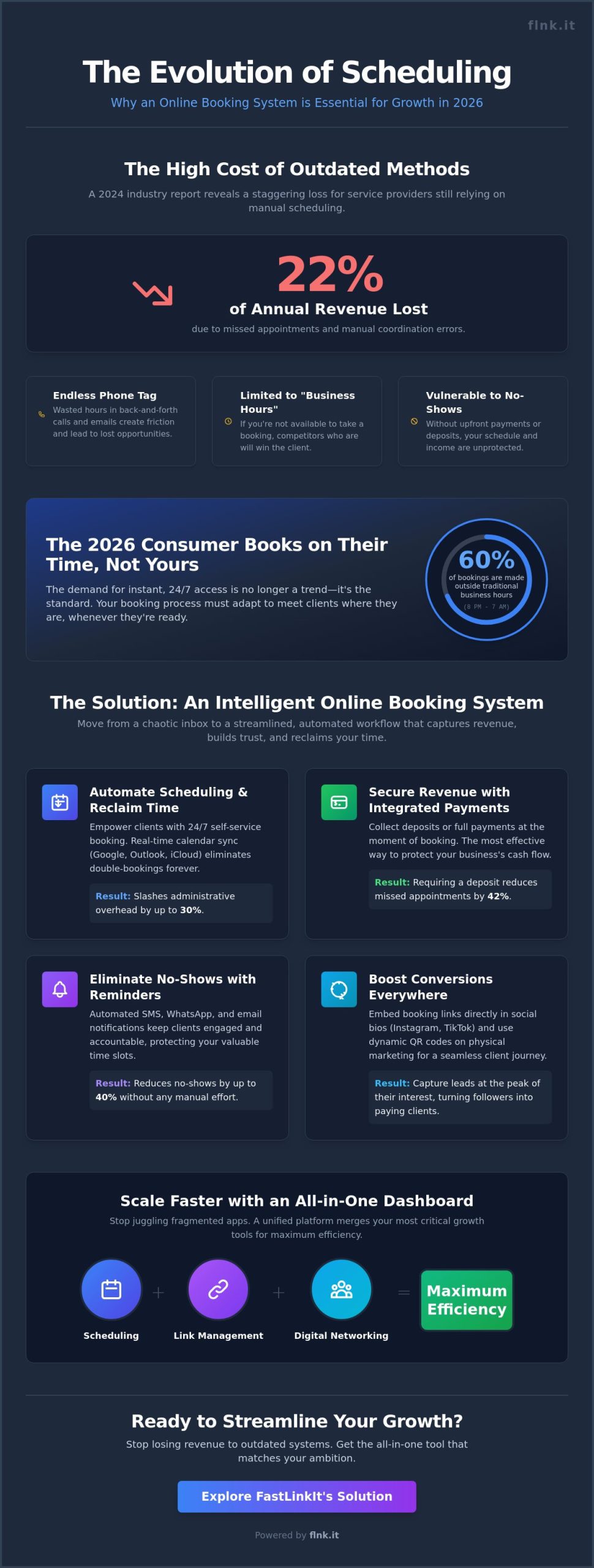
A 2024 scheduling industry report shows the average service provider loses 22% of their annual revenue to missed appointments and manual errors. It is a staggering figure that proves why a paper diary or a basic calendar app is no longer a viable business strategy. Transitioning to a professional online booking system does more than just fill your slots; it reclaims your time and establishes immediate professional authority. You already know that every minute spent playing phone tag with a client is a minute taken away from your actual craft.
Your technology should be as streamlined and innovative as the services you provide. We agree that managing a schedule shouldn’t feel like a second full-time job. You deserve a ‘set it and forget it’ workflow that handles the logistics while you focus on high-level growth. This guide reveals the top platforms for 2026 designed to eliminate no-shows and collect payments at the moment of booking. We will explore five elite tools that sync your fragmented apps into one cohesive ecosystem that matches your brand and scales with your ambition.
Key Takeaways
- Master the shift to 24/7 automated scheduling to reclaim your time and eliminate manual coordination errors.
- Secure your revenue by integrating seamless payment processing and real-time calendar synchronization into your daily workflow.
- Evaluate the industry-leading online booking system options for 2026 to find the perfect match for your business model.
- Boost conversions by embedding booking links directly into your social profiles and using dynamic QR codes on physical marketing.
- Scale faster with an all-in-one dashboard that merges scheduling, link management, and digital networking for maximum efficiency.
The Evolution of Scheduling: Why an Online Booking System is Essential in 2026
A modern online booking system is no longer a luxury for small businesses; it’s the digital front door. By definition, this technology is a cloud-based interface that empowers clients to view real-time availability and self-schedule appointments without human intervention. The Evolution of Scheduling has moved past static calendars into dynamic, integrated ecosystems that handle everything from discovery to payment. In 2026, the market has shifted from website-centric discovery to social-first interactions. Clients find you on Instagram or TikTok and expect to book immediately through a link in your bio.
Manual scheduling is a silent growth killer. Relying on back-and-forth emails or phone calls creates friction that modern consumers won’t tolerate. If a lead has to wait four hours for a callback, they’ve already booked with a competitor who offers instant confirmation. An automated system provides 24/7 accessibility, slashes administrative overhead by 30 percent, and secures revenue through immediate payment integration. It’s about reclaiming your time while providing a frictionless entry point for your customers.
Meeting the Expectations of the 2026 Consumer
The demand for instant gratification has reached a peak. Data shows that 60 percent of users now book services outside of traditional business hours, typically between 8:00 PM and 7:00 AM. If you aren’t “open” for bookings while you sleep, you’re losing more than half of your potential leads. Automated reminders are equally vital. Implementing SMS and email alerts reduces no-shows by up to 40 percent, protecting your bottom line from empty time slots. Moving to a digital-first experience isn’t just about convenience; it’s about survival in a high-speed economy.
Beyond the Calendar: Booking as a Marketing Asset
Your booking page is a powerful secondary landing page for your brand. It’s often the final touchpoint before a conversion happens. Managing a modern event booking flow allows you to collect valuable data on peak demand periods and client preferences. This information lets you optimize your pricing and staffing levels based on hard evidence rather than guesswork. A sleek, professional scheduling interface also builds immediate psychological trust. It signals that your business is organized, tech-savvy, and ready to deliver a high-quality service from the very first touchpoint.
Critical Features to Evaluate in Your Next Booking Platform
Choosing an online booking system defines your professional rhythm. It’s the difference between a chaotic inbox and a streamlined schedule. Your platform shouldn’t just record dates; it should act as an intelligent gatekeeper for your time. Precision is the priority here. A high-performing system acts as a silent partner, managing logistics while you focus on your craft.
Real-time calendar synchronization is the foundation of this efficiency. Your chosen tool must bridge the gap between Google, Outlook, and iCloud instantly. This single source of truth eliminates the risk of double-bookings. When your personal and professional calendars speak the same language, you avoid the embarrassment of overlapping commitments. Beyond basic scheduling, look for these core capabilities:
- Automated communication: Systems that trigger SMS, WhatsApp, and email notifications keep clients informed without manual effort.
- Customizable intake forms: Gather essential data before the meeting starts to maximize every minute of the session.
- Advanced analytics: Track your conversion rates from the initial link-click to the final confirmed booking to identify where you’re losing potential revenue.
The Importance of Seamless Payment Integration
Cash flow is the lifeblood of any small business. Collecting deposits or full prepayments at the point of booking is the most effective protection against no-shows. According to 2025 industry data, businesses requiring a deposit see a 42% reduction in missed appointments. You’ll need to decide between flat-fee transaction models, which suit high-ticket services, or percentage-based models that scale with your volume. For those managing community initiatives, integrating your online booking system with specialized fundraising and payment tools ensures that every transaction aligns with your organizational goals.
User Experience (UX) for Both Admin and Client
The interface is your digital storefront. A mobile-first design is mandatory, as mobile bookings are projected to account for 85% of all appointments by the end of 2026. The flow must be frictionless, requiring minimal taps to reach a confirmation screen. White-label options are equally vital; they allow you to maintain brand consistency by removing third-party logos. This builds trust and keeps your identity front and center. Finally, ensure the platform offers robust API and plugin compatibility for WordPress, Shopify, or custom stacks. If you’re looking to simplify your professional networking alongside your scheduling, you might explore how modern event booking integrates with your digital identity.
Top 5 Online Booking Systems for 2026: A Comparative Roundup
The market for an online booking system has evolved into a specialized landscape. Generic tools no longer cut it. To stay competitive in 2026, your choice must align with your specific workflow, whether you’re running a high-traffic salon or a solo creator brand. Here are the five platforms dominating the industry this year.
- Square Appointments: The gold standard for retail and beauty. It syncs inventory with your calendar, making it the best choice for businesses with physical storefronts.
- SimplyBook.me: A powerhouse for complex service models. If you need deep API access or custom CSS for your booking page, this is your tool.
- Calendly: The undisputed leader for professional networking. It remains the fastest way to schedule 1-on-1 discovery calls without back-and-forth emails.
- Acuity Scheduling: Essential for healthcare and wellness. It offers robust intake forms and maintains strict HIPAA compliance for sensitive client data.
- FastLinkIt: The ultimate “Social-to-Booking” bridge. It’s designed for the 2026 creator economy, turning social media followers into booked clients with a single touch.
Square vs. SimplyBook: Which Giant Fits Your Scale?
Choosing between these two depends on your operational volume. Square is built for speed in physical locations. Its 2026 interface handles high-volume salon walk-ins and pre-booked appointments with zero lag. SimplyBook.me targets businesses requiring granular control. While Square’s cost is often tied to transaction fees, SimplyBook uses a tiered subscription model. Switching systems is easier than ever; both now support standardized CSV data migrations, meaning you won’t lose your 2025 client history during the move.
The Rise of the All-in-One Creator Toolkit
Creators are ditching fragmented apps. Using three different tools for links, bookings, and payments is an outdated 2023 strategy. The shift toward integrated platforms like FastLinkIt allows for a frictionless user journey. When a follower clicks your bio link, they shouldn’t just see a list of URLs. They should see your availability immediately.
A critical advantage of this modern approach is having a contact manager built directly into your scheduler. This integration ensures that every person who books a slot is automatically categorized for future marketing. It turns a simple online booking system into a growth engine. FastLinkIt bridges the gap between your digital identity and event management, proving that in 2026, your booking tool is your most important brand asset.
Maximizing Conversions: Integrating Booking into Your Social Strategy
A modern online booking system isn’t just a backend tool. It’s a front-facing conversion engine. Data from early 2026 indicates that 74% of consumers prefer booking services directly through social platforms rather than navigating to a separate website. If your scheduling process requires more than three clicks, you’re losing revenue. Efficiency is the new currency in a mobile-first economy.
The Power of the Link-in-Bio for Scheduling
A dedicated link in bio acts as a digital concierge. It eliminates the friction of navigating a complex, multi-page website. A 2025 case study of a London-based boutique salon showed a 32% increase in monthly appointments after they replaced their traditional site with a single, high-performance booking link. For maximum impact, place your primary CTA in the top third of the mobile screen. This ensures immediate visibility. Use clear, action-oriented labels like “Secure Your Slot” instead of generic “Contact” buttons.
Leveraging QR Codes for In-Person Conversions
Physical marketing shouldn’t be a dead end. Placing QR codes on business cards, flyers, and storefronts creates an instant bridge to your schedule. Use dynamic links to update your destination page without reprinting materials. This flexibility saved small businesses an average of $450 in printing costs in 2025. Tracking these scans allows you to measure the exact ROI of your offline advertising. You’ll know exactly which flyer at which location generated the most bookings.
Beyond the initial click, your strategy needs layers to ensure long-term growth. Follow these steps to tighten your funnel:
- Activate native buttons: Set up ‘Book Now’ buttons on Instagram and Facebook business profiles. These integrate directly with your online booking system for a seamless user experience.
- Automate your retention: Configure automated email follow-ups. Businesses using automated re-booking reminders saw a 22% higher customer retention rate last year.
- Monitor referral traffic: Use UTM parameters to see which social channel drives the most appointments. Focus your energy where the conversions actually happen.
Stop losing clients to slow processes and outdated interfaces. Transition to a system that works as fast as your business moves. Modern scheduling is about being where your customers are.
Streamlining Your Growth with FastLinkIt’s All-in-One Solution
FastLinkIt redefines how modern entrepreneurs manage their time and digital presence. By 2026, the demand for hyper-efficiency has made fragmented software stacks a liability. This platform delivers a sophisticated event booking system that eliminates the gap between discovery and conversion. You don’t just share a link; you open a gateway to your entire business ecosystem. It’s fast, it’s elegant, and it’s built for results.
Managing your brand becomes effortless when link shortening, dynamic QR codes, and scheduling live in a single dashboard. This unified approach ensures that every touchpoint is an opportunity. Whether you’re a solo consultant or a growing agency, the ability to scale from a free starter link to a full white-label solution provides the flexibility required in a fast-paced market. You own your data and your brand identity without the technical overhead or the clutter of traditional tools.
Setting Up Your First Event with FastLinkIt
Speed is the new currency. You can define event types, set strict capacity limits, and establish custom pricing in under three minutes. By integrating Stripe, you enable seamless event booking with payment, which significantly reduces no-shows. Every booking feeds directly into the built-in contact manager. This allows you to track attendee history and preferences without manual data entry, making spreadsheets a thing of the past.
Why Unified Tools Win in 2026
Tool fatigue drains resources and kills momentum. Research indicates that switching between unrelated apps can cost a business up to 40% of its productive time. FastLinkIt acts as your central hub, combining your marketing stack into one sleek interface. This online booking system doesn’t just record dates; it integrates with email marketing tools to automate post-appointment nurturing immediately.
Data accuracy improves when client interactions stay within one environment. You’ll see exactly which QR code or shortened link led to a specific booking, providing clear ROI for every campaign you run. It’s time to stop chasing software and start growing your business with a online booking system built for the next decade of digital commerce. Start your FastLinkIt journey today and experience the power of one-touch connectivity.
Own Your Schedule and Scale Smarter in 2026
The landscape of 2026 demands more than just a digital calendar. Industry data shows that 82% of clients now prefer booking via mobile-first interfaces rather than making phone calls. Choosing the right online booking system isn’t just about managing time; it’s about capturing every lead at the exact moment of interest. You’ve seen how top-tier platforms now bridge the gap between social discovery and confirmed appointments. Success in this fast-paced environment requires a tech stack that eliminates friction and automates the heavy lifting of client retention.
FastLinkIt transforms your digital presence into a high-converting growth engine. It’s built for the modern entrepreneur who values efficiency and professional elegance. With integrated Stripe payments, you’ll secure revenue instantly. The built-in CRM and email marketing tools ensure no follow-up falls through the cracks. Plus, dynamic QR code and link-in-bio support turn every physical and digital touchpoint into a booking opportunity. Stop wasting time on manual admin and start focusing on your craft.
Scale your business with FastLinkIt’s all-in-one booking and marketing platform
The future of your business is just one tap away. Let’s make it happen today.
Frequently Asked Questions
What is the best online booking system for a one-person business?
Calendly is the top choice for solo entrepreneurs because it automates scheduling without any complex overhead. It connects directly to your digital profile and saves you roughly 4 hours of administrative work every week. The free tier covers basic needs, while the $10 monthly plan adds professional branding. It’s efficient, fast, and eliminates the back-and-forth emails that drain your productivity.
Can I accept payments through my online booking system?
You can accept payments instantly by integrating processors like Stripe or PayPal directly into your online booking system. This feature reduces no-shows by 35% because clients commit financially at the moment of booking. You set the price, choose the currency, and the system handles the transaction. It’s a seamless way to professionalize your workflow and secure your revenue before the appointment starts.
How do I prevent clients from booking at the last minute?
You prevent last-minute surprises by setting a minimum notice period in your system settings. Most professionals set a 24-hour buffer to ensure they’re always prepared for their next session. This setting automatically hides immediate time slots from your public calendar. It gives you total control over your schedule. You’ll never walk into a meeting you didn’t know existed 10 minutes ago.
Is it possible to sync my booking system with Google Calendar?
Every modern scheduling platform offers real-time two-way synchronization with Google Calendar. When a client books a slot, it appears on your phone instantly. If you add a personal lunch break to your Google Calendar, that time becomes unavailable for clients automatically. This prevents double bookings with 100% accuracy. It’s the simplest way to manage your professional and personal life in one unified view.
What is the difference between an appointment scheduler and an event booking system?
Appointment schedulers manage 1-on-1 sessions based on your general availability, while event systems handle specific dates for groups. An appointment system works for consultants or doctors who see people individually throughout the day. Event systems are built for workshops or tours with a fixed capacity, like 20 seats. Choosing the right one depends on whether you’re selling your time or a specific ticketed experience.
Do I need a website to use an online booking system?
You don’t need a website because most platforms provide a dedicated, hosted booking page for your business. You can link this page to your digital business card or social media bio for instant access. It’s a paperless solution that works perfectly for mobile users. Over 60% of small business owners now skip traditional websites in favor of these streamlined, high-conversion landing pages.
How much does a professional booking system typically cost in 2026?
A professional booking system in 2026 typically costs between $15 and $50 per month depending on your specific feature requirements. Basic plans often start at $0 for simple scheduling, but automated reminders and payment tools usually require a paid tier. According to 2025 industry reports, mid-range plans offer the best ROI for growing teams. It’s a small investment for a tool that recovers hours of manual labor.
Can I use QR codes to let customers book appointments?
You can use QR codes to let customers book appointments by linking the code directly to your scheduling URL. This creates a frictionless experience where a client scans your card and picks a time in 3 seconds. It’s the ultimate bridge between the physical and digital worlds. It eliminates manual data entry and ensures your booking link is always in your customer’s pocket.


One thought on “5 Best Online Booking Systems for Small Businesses in 2026”